October 9, 2026
What Tree Removal Costs in Prescott
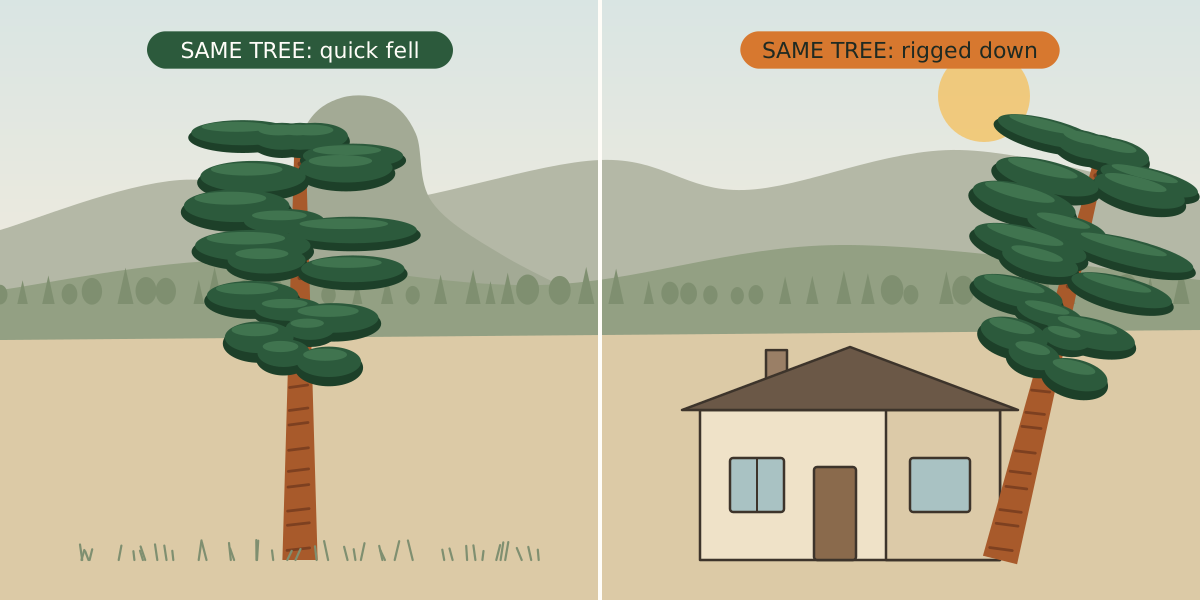
“How much to take down a tree?” is the most common question on the phone, and the honest answer is that nobody can tell you until they’ve seen it. That isn’t a dodge. Two ponderosas of exactly the same height can differ by several times in price, and the reasons are all things you can see from your own yard.
This guide walks through what actually sets the price of a removal in Prescott, Prescott Valley and the rest of Yavapai County, so you can read a quote with a clear eye and spot the places where you can save.
The six things that set the price
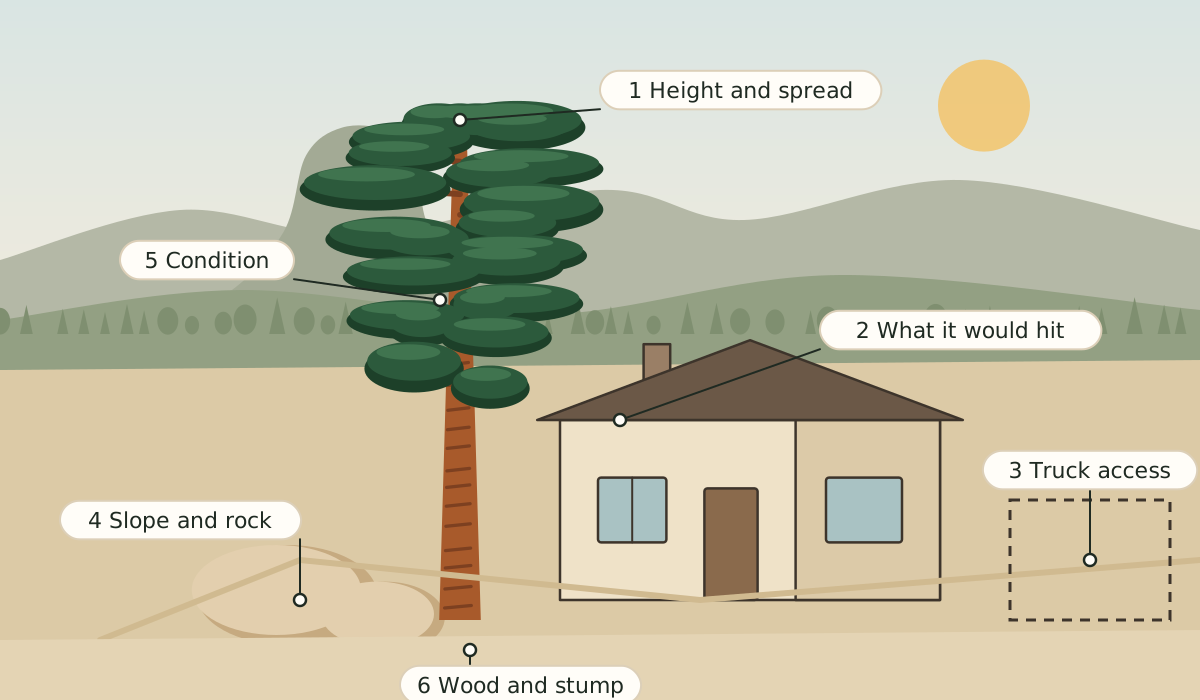
1. Height and spread. Bigger trees take longer, produce more wood, and need more rigging. But height alone is a weak predictor, because of everything below.
2. What the tree would hit. This is the big one. A pine that can fall in one piece into an open pasture in Williamson Valley might take minutes to drop. The same pine leaning over a roof, a fence and a power drop has to be climbed and taken down in short sections, each one lowered on a rope. That can turn a one-hour job into a full day for a three-person crew.
3. Truck and equipment access. Can a chip truck back up close? Will a compact loader fit through the side gate? On many lots around Thumb Butte and the Granite Dells, the answer is no, and every branch and every round of trunk wood gets carried by hand down steps and past retaining walls.
4. Slope and rock. Prescott’s granite hills make for beautiful lots and slow tree work. Crews need safe footing to fell, rig and carry, and steep ground means more time and sometimes more people.
5. The tree’s condition. A live, healthy tree is predictable to climb. A ponderosa that has stood dead for a year after bark beetles killed it is brittle and may not hold a climber at all, which means a bucket truck or crane. That’s one reason to act quickly on a dead pine; see our page on dead pine removal.
6. Wood and stump. Hauling off every piece costs more than leaving the wood on site, cut to firewood length. Stump grinding is a separate line on most quotes.
Why there’s no flat price per foot
Some websites publish prices per foot of height. In Yavapai County that’s close to useless, because the factors above swamp height. A 40-foot Siberian elm in the middle of a flat Prescott Valley backyard with a wide gate may cost less than a 25-foot juniper wedged between a house and a boulder in the Dells.
What you should expect instead is a site visit and a written quote. If someone gives you a firm price over the phone for a large tree they haven’t seen, either they’re padding it to cover the unknowns, or the price will change on the day.
What a good quote includes
A written quote should spell out:
- Which trees, by species and location, so there’s no confusion on the day
- How they’ll come down: felled whole, or climbed and rigged in sections
- Cleanup: whether all brush is chipped and hauled, and how the yard is left
- Wood: hauled off, left in rounds, or cut and stacked as firewood
- Stump: ground, and how deep, or left at a set height
- The company’s Arizona ROC license number and proof of insurance
If two quotes differ a lot, compare these lines first. Often the cheaper one leaves the wood, skips the stump, or assumes the tree can be felled in one piece when it can’t.
Honest ways to spend less
Bundle the work. Mobilizing a crew, a truck and a chipper is a fixed cost. Doing three trees in one visit costs less than three separate visits, and neighbors on the same street sometimes split a crew day.
Keep the wood. If you burn wood, have it cut to length and left in a pile. Juniper and oak make good firewood once seasoned. Keep beetle-killed pine well away from living pines until it’s dry.
Leave the stump. A stump cut low can sit under a planter or simply weather. You can always have it ground later.
Don’t wait on dead pines. A pine killed this summer is a routine climb. The same tree a year later may need a bucket truck or a crane.
Ask whether it needs to come out at all. Plenty of trees people want removed only need a good trim or a deadwood clean-out. A crew that tells you that is a crew worth calling back.
Does insurance pay?
Homeowners’ insurance usually pays to remove a tree when it has fallen on and damaged a covered structure, such as the house, a garage or a fence, up to a limit set in the policy. It usually won’t pay to remove a healthy tree before it falls, or a tree that fell without hitting anything. If a storm has already done damage, read our guide on what to do after a monsoon storm.
Getting a quote
Call (928) 766-TREE and tell us the tree, roughly how tall it is, what’s under it, and how a truck gets in. We’ll line up a licensed, insured local tree company to look at it and give you a price in writing before any work starts.