Yavapai County · Defensible Space
Defensible space and Firewise clearing in Prescott
Prescott sits squarely in the wildland urban interface. Neighborhoods like Groom Creek, Ponderosa Park and the homes along Senator Highway are built into ponderosa forest, and much of the rest of the quad-city area backs onto juniper, oak and chaparral. Defensible space is the thinning and clearing around a home that slows a wildfire down and drops it to the ground before it reaches the house.
Call (928) 766-TREE and tell us roughly how much ground you want cleared, what's growing on it and how steep it is. We'll send a licensed local tree company to walk the property and price it in writing, zone by zone, so you can do the most important part first if the budget is tight.
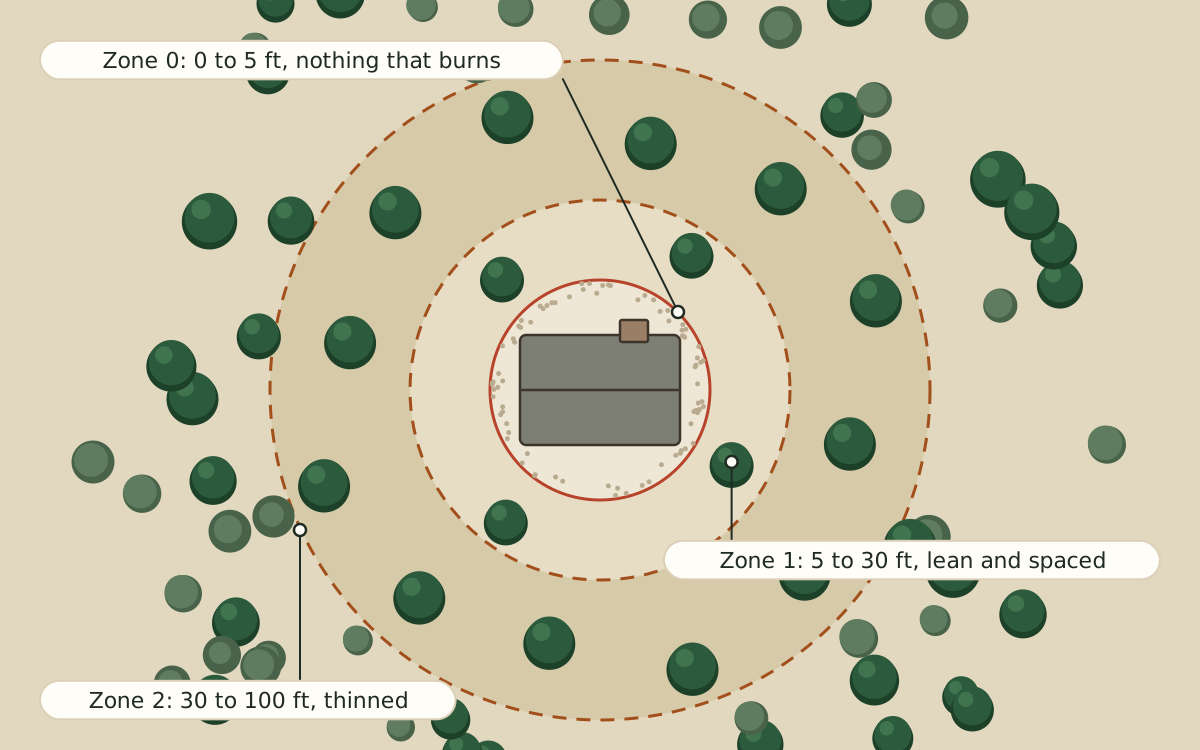
- Zone by zonePlanned around the 0–5, 5–30 and 30–100 foot zones that fire agencies use.
- Ladder fuels outLower limbs raised and brush under trees removed so fire can't climb.
- Spacing, not clearcuttingCanopy thinned to break up fuel, keeping healthy shade trees.
- Slash handledCut material chipped or hauled, never left in piles to dry out.
The three zones around your home
Fire agencies split the ground around a house into zones. The first five feet, often called Zone 0, should hold nothing that burns: no bark mulch, no junipers against the siding, no firewood stacked on the deck. Embers landing here are what ignite most homes, often well ahead of the flames.
From 5 to 30 feet, the goal is lean, green and spaced out. Trees are limbed up, typically 6 to 10 feet off the ground, crowns are spaced so they don't touch, and shrubs are kept low and well apart from trees. From 30 to 100 feet, or to your property line, the work is thinning: dead trees, dense thickets of small junipers and oak brush, and the low limbs that let a grass fire climb into the canopy. Fire runs uphill faster, so on a slope the cleared distance on the downhill side should be larger.
What grows here, and how much to take
Around Prescott, the fuels that worry fire crews most are dense young ponderosa thickets, alligator and Utah juniper, shrub live oak and manzanita. Junipers are the big one: the foliage is oily, holds dead material inside, and burns hot. A typical job removes the junipers closest to the house, thins the ones farther out, and keeps larger, healthy pines and oaks, limbed up and spaced.
The goal isn't a moonscape. A well-thinned lot still has shade and still looks like the forest you bought into; it just doesn't have a continuous carpet of fuel from the hillside to the eaves. A good crew talks through each tree with you rather than clearing everything green.
Keeping it maintained, and what to do with the slash
Defensible space isn't a one-time job. Grass and oak brush grow back after every monsoon, and pine needles pile up in gutters every fall, so most properties need a lighter maintenance pass every year or two after the first big clearing.
The cut branches and brush, called slash, have to go somewhere. Chipping on site is usually fastest, and a thin layer of chips away from the house is fine, but keep them out of the first five feet. Fresh pine slash left in piles through spring and early summer can breed Ips bark beetles, so don't let it sit. Burning piles needs a permit from your fire district and stops during fire restrictions. The City of Prescott has run seasonal brush collection for residents, so check what's offered this year before paying to haul.
Why call this line
What you can count on
Licensed, insured
Every company we send holds an Arizona ROC license and liability insurance. Ask to see both.
Written quote first
A price in writing before work starts, with stump grinding and haul-off listed separately.
Local to the county
Crews based around Prescott and the Verde Valley who know the trees and the terrain.
Storm calls 24/7
Trees on homes, cars and driveways, any hour of the day or night.
Questions
Questions about defensible space
How much defensible space do I need?
Fire agencies generally recommend managing at least 100 feet around the home, or to your property line if that's closer, with the most intensive work within 30 feet. Steeper lots and homes surrounded by dense brush need more.
Does defensible space help with insurance?
Some insurers in high fire risk areas ask about or inspect defensible space when writing or renewing a policy. Requirements vary by company, so ask your agent what they look for, and keep the invoice plus before and after photos.
Will the crew cut down all my trees?
No. The point is spacing and removing the fuel that connects the ground to the canopy. Healthy, well-placed pines and oaks are usually kept and limbed up.
When is the best time to do fire clearing?
Late fall through early spring, before the dry, windy weeks of May and June. Cutting may be limited during fire restrictions, and running a chainsaw in dry grass on a hot afternoon is a fire risk in itself.
Also available
Related tree work
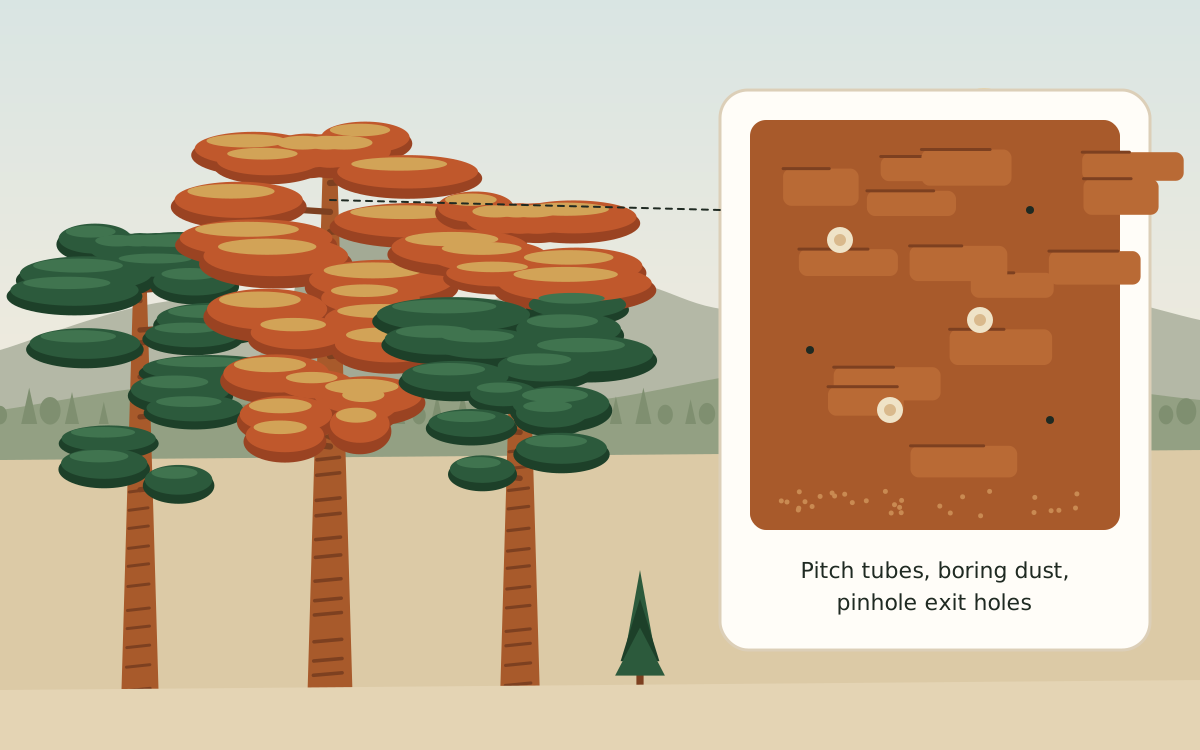
Dead Pine Removal
Beetle-killed ponderosa and pinyon taken down while the wood is still sound, with the infested wood dealt with.
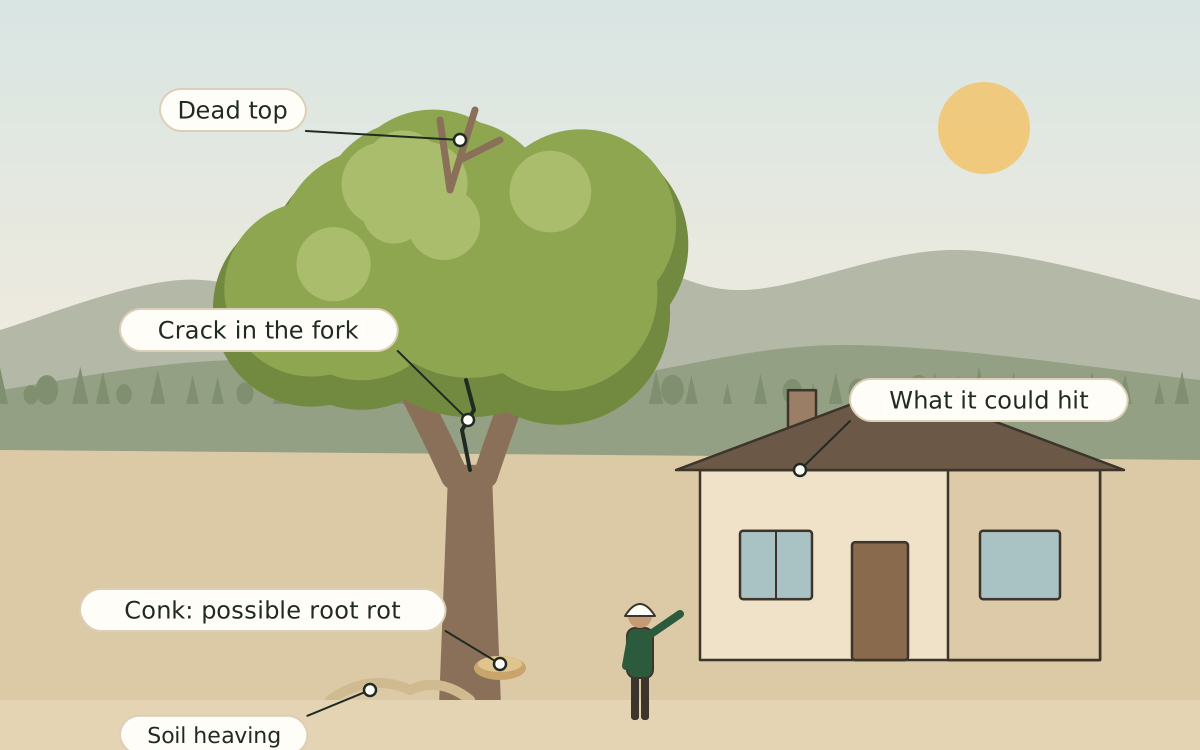
Hazard Tree Checks
A trained look at the cracked fork, the leaning pine or the dead top over the garage. Keep, prune or remove.
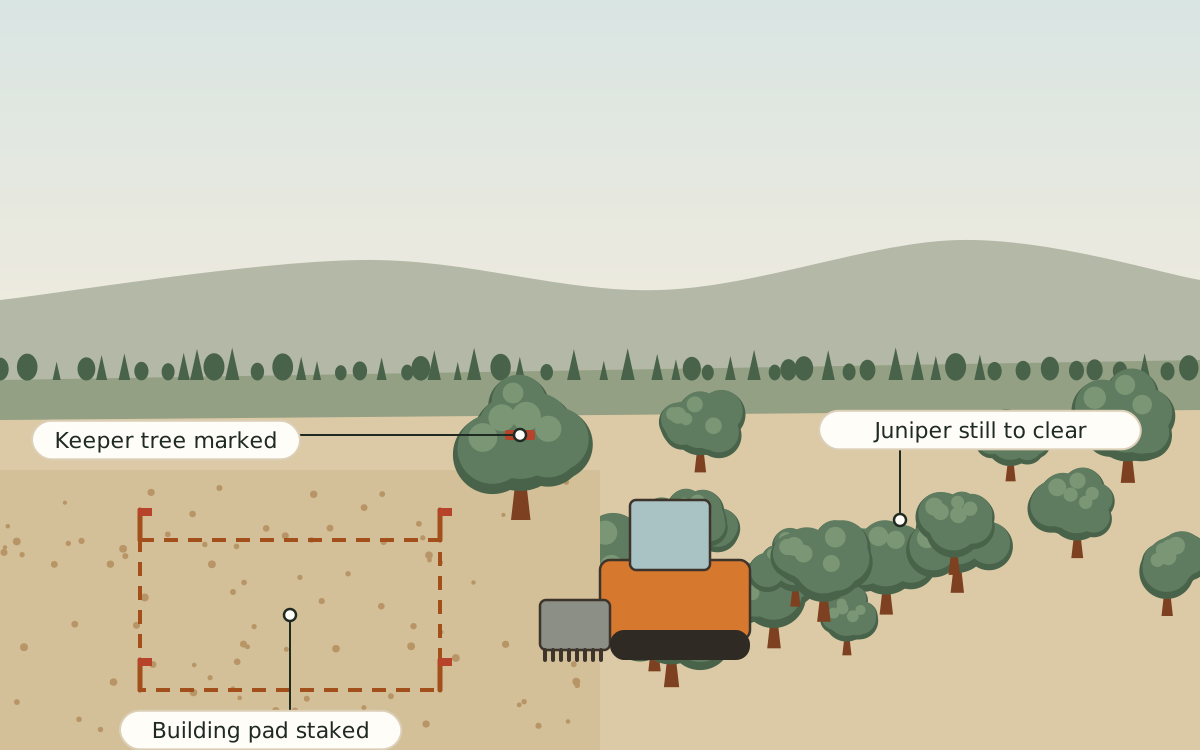
Lot Clearing
Juniper, scrub oak and pine thickets cleared for a build, a survey or a pasture, by hand or by mulcher.